Introduction: Why One Approach Does Not Explain Everything
The human brain is an extraordinarily complex system. It is involved in movement, balance, memory, attention, communication, sensory processing and countless everyday activities that most people perform without thinking.
When a brain injury occurs, its effects can extend beyond a single function. Depending on the nature and severity of the injury, different areas of daily life may be affected.
Consider someone who experiences a significant accident. Physical movement may be one concern, but there may also be changes in concentration, balance, sleep patterns, sensory processing and emotional well-being. Looking at only one aspect of the situation may provide an incomplete picture.
This is where the concept of a multi-modal approach to brain injury becomes important.
Rather than focusing on one intervention in isolation, a multi-modal framework considers several interconnected areas. These may include neurological rehabilitation, physical therapies, cognitive training, metabolic considerations, lifestyle support and, in some programmes, Hyperbaric Oxygen Therapy (HBOT).
The central idea is straightforward: understand the wider picture before deciding which professional interventions may be appropriate.
For organisations and individuals interested in hyperbaric technology, this framework also provides useful context for understanding where HBOT fits into a broader therapeutic environment.
1. Understanding Traumatic and Acquired Brain Injuries
Brain injuries are not all the same. Their causes, characteristics and individual circumstances can differ considerably.
Broadly, the presentation distinguishes between two important categories.
Traumatic Brain Injury (TBI)
Traumatic brain injury occurs following an external physical force affecting the brain.
Examples include:
- Concussions and mild traumatic brain injuries.
- Penetrating or open head injuries.
- Diffuse axonal injuries.
- Intracranial haematomas.
Road accidents, falls, sports-related incidents and other physical impacts can be associated with traumatic brain injuries.
A concussion, for example, should not be dismissed simply because an individual did not lose consciousness. The absence of that particular event does not, by itself, establish the full extent of an injury.
Acquired Brain Injury (ABI)
Acquired brain injury is a broader category that includes brain injuries occurring after birth from causes other than a direct traumatic impact.
Examples discussed in the presentation include:
- Hypoxic or anoxic injury associated with reduced or absent oxygen supply.
- Haemorrhagic events, including stroke and certain forms of bleeding.
- Tumour-related effects and associated treatments.
- Encephalitis and other inflammatory or infectious conditions.
- Poisoning.
- Medication-related and substance-associated factors.
These categories demonstrate why the nature of an injury matters. Different circumstances call for different assessments and professional considerations.
Understanding the type of injury is an important starting point for developing an appropriate care framework.
2. The Five Dimensions of a Multi-Modal Approach
One of the most interesting elements of the presentation is its emphasis on five interconnected areas:
- Neurological
- Physical
- Cognitive
- Metabolic
- Lifestyle
These areas are not independent compartments. They interact with one another, which is why an individualised approach may consider them together.
2.1 Neurological Considerations
The neurological dimension focuses on understanding the nervous system and its functions.
A professional assessment may consider muscle responses, reflexes, sensory processing, autonomic nervous system functions, brain regions and the relationship between different neurological systems.
For example, balance difficulties may involve more than muscular strength alone. Vision, vestibular processing, sensory information and coordination can also be relevant to a professional assessment.
The objective is to understand an individual’s abilities, limitations and specific areas requiring attention.

Neurological rehabilitation programmes may incorporate different activities and assessment methods, depending on the professional’s findings.
2.2 Physical Rehabilitation
The physical dimension looks at how the body moves and performs everyday activities.
Areas that may be evaluated include:
- Muscle tone and strength.
- Posture and core stability.
- Balance and gait.
- Coordination.
- Gross and fine motor skills.
- Agility and movement timing.
Imagine someone who finds it difficult to maintain balance while walking or coordinating movements during everyday activities.
A physical assessment may investigate several contributing factors instead of focusing exclusively on one muscle group.
Physical rehabilitation can involve structured movement activities, coordination exercises, balance training and other professionally guided approaches.
The emphasis is on understanding movement as part of the wider relationship between the brain and body.
2.3 Cognitive Function
The cognitive dimension explores how individuals process information and interact with their surroundings.
Attention, concentration, reaction time, executive function, impulse control, cognitive flexibility and self-regulation are among the areas considered in the presentation.
These functions are relevant to ordinary activities.
For example, organising a daily schedule requires planning and decision-making. Following a conversation requires attention and processing. Responding to an unexpected situation involves interpreting information and selecting an appropriate action.
Cognitive assessment and professionally guided rehabilitation may therefore form part of a broader programme.
Neurofeedback and other cognitive training approaches are among the modalities discussed in the presentation.
2.4 Metabolic Considerations
The brain is part of a much larger physiological system. A wider assessment may therefore consider metabolic and general health factors.
The presentation identifies several areas of interest:
- Energy production.
- Dietary intake.
- Gut function.
- Existing or co-occurring health conditions.
- Medication and supplement use.
- Substance exposure.
- Relevant laboratory findings.
This perspective encourages practitioners to look beyond the immediate injury and consider the individual’s wider circumstances.
Laboratory investigations, where appropriate, are selected according to professional judgement and individual requirements. They are not necessarily identical for every person.

2.5 Lifestyle and Everyday Habits
Lifestyle is another important dimension of the multi-modal framework.
Sleep, nutrition, exercise, stress management, technology use, outdoor activity and the home environment can all form part of a discussion about an individual’s overall circumstances.
Consider two people with similar daily routines but very different sleep schedules, activity levels and sources of stress. Their individual circumstances may require different considerations.
Lifestyle support is not simply an additional activity added to a programme. It is a way of examining the everyday environment in which a person lives.
A comprehensive approach considers both professional interventions and practical lifestyle factors.
3. Why Assessment Comes Before Intervention
A multi-modal approach does not mean selecting every available therapy and combining them without a clear purpose.
The starting point is understanding the individual.
The presentation outlines a structured evaluation framework that includes:
- Detailed personal and medical history.
- Review of previous diagnostic information.
- Neurological evaluation.
- Computerised neurocognitive assessments.
- EEG and quantitative EEG investigations.
- Eye movement and pupil assessments.
- Balance and vestibular evaluations.
- Motor timing assessments.
- Laboratory testing when indicated.
- Individualised care-plan recommendations.
Not every assessment is suitable or necessary for every person. The appropriate selection depends on professional evaluation and the circumstances involved.
This distinction matters because the quality of a programme is not determined by the number of technologies it uses.
It is determined by how carefully its components are selected, evaluated and incorporated into an appropriate professional plan.
4. Different Modalities Within a Broader Therapeutic Framework
The presentation discusses a range of modalities that may be considered within specialised programmes.
Understanding these technologies helps explain what a multi-modal environment can look like.
Functional Neurological Rehabilitation
Functional neurological rehabilitation can include activities involving balance, vestibular processing, eye movements, auditory processing, sensorimotor integration and motor coordination.
These approaches are concerned with different aspects of how the nervous system interacts with physical activity and sensory information.
Physical and Musculoskeletal Therapies
Physical therapies and musculoskeletal approaches may form part of a wider programme.
Depending on individual requirements, these may involve movement activities, coordination exercises, core stability work and other professionally supervised interventions.
Neurofeedback and Biofeedback
Neurofeedback and biofeedback are technologies used to present information about selected physiological signals.
Neurofeedback programmes commonly involve presenting feedback from recorded brain activity, while biofeedback can involve other physiological measurements.
Their inclusion in a programme depends on the professional approach and individual circumstances.
Low-Level Laser Therapy
Low-level laser therapy (LLLT), also referred to in the presentation as photobiomodulation, uses specific wavelengths and light parameters.
It is discussed as a separate modality alongside other technologies.
Its potential applications and suitability should be considered independently rather than assumed to be appropriate for every individual.
Hyperbaric Oxygen Therapy
Hyperbaric Oxygen Therapy is another technology discussed within the presentation.
It involves breathing oxygen in a pressurised chamber environment.
HBOT is particularly interesting from a technology perspective because pressure and oxygen are central to how the system operates.
It is important, however, to distinguish the physical process of HBOT from claims about clinical outcomes. Its inclusion in a multi-modal programme does not establish that it is appropriate for every brain injury or that it produces a particular result.
5. Understanding the Role of HBOT in a Multi-Modal Environment
What makes HBOT relevant to this discussion?
The answer begins with the technology itself.
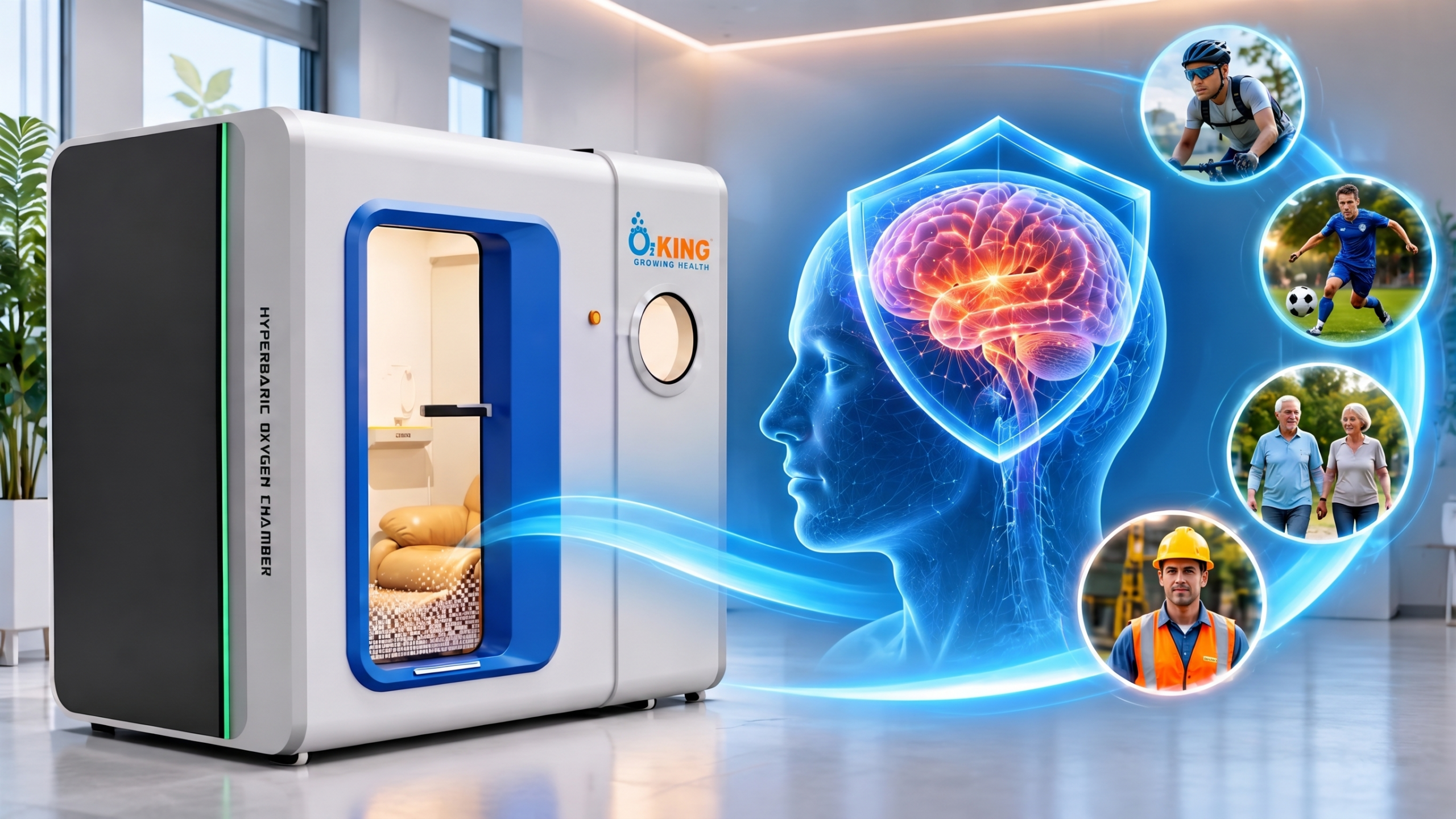
Hyperbaric Oxygen Therapy involves the use of a specially designed chamber in which the ambient pressure is increased above normal atmospheric pressure while oxygen is administered according to the system’s operating protocol.
This creates a controlled environment that differs from ordinary breathing at atmospheric pressure.
HBOT is discussed alongside other functional neurological modalities in the presentation, rather than as the only component of a broader programme.
That distinction is important.
A hyperbaric chamber is a specialised piece of equipment. It does not replace neurological assessment, physical rehabilitation, professional supervision or other appropriate interventions.
Its potential role must be evaluated in the context of the individual, the intended application, equipment specifications and applicable clinical and safety requirements.
HBOT and Low-Level Laser Therapy
An especially interesting section of the presentation discusses HBOT alongside low-level laser therapy.
Both are presented within a wider discussion of oxygen, cellular processes and energy-related concepts.
The presentation proposes that these modalities may be considered together within selected programmes. However, this should be understood as the presenter’s proposed approach, not as proof of a universally established combined treatment or guaranteed outcome.
For anyone exploring these technologies, the important lesson is that different modalities have different operating principles and should be evaluated on their own merits.
6. The Concept of Layered or Stacked Therapies
Another key idea introduced in the presentation is layered therapy.
The term refers to combining or coordinating different therapeutic activities rather than viewing every intervention as an isolated activity.
The presentation describes this through the concepts of simultaneous bottom-up and top-down approaches.
In practical terms, a programme may involve different dimensions of activity, such as physical exercises, cognitive tasks and selected technological interventions.
However, more therapies do not automatically mean a better programme.
The selection, sequencing and supervision of interventions are important considerations. The approach should be based on individual assessment rather than a fixed combination applied to everyone.
This is where professional planning becomes essential.
A multi-modal environment should be organised around clear objectives, appropriate equipment and ongoing evaluation.
7. The Importance of Individualised Programmes
A useful way to understand this concept is to imagine two individuals with different circumstances.
One may have difficulties primarily associated with physical coordination, while another may require attention to cognitive assessment, sensory processing and everyday routines.
Even when both individuals have a history of brain injury, their circumstances are not necessarily identical.
A programme designed around one person’s needs may not be appropriate for another.
That is why individual assessment matters.
A thoughtful programme considers the type of injury, the individual’s history, existing health circumstances, professional findings, available resources and the suitability of particular interventions.
It also allows professionals to review progress and adjust the approach when necessary.
The goal of individualisation is not to use as many technologies as possible. It is to make informed decisions about which components belong in a particular programme.
8. Where Hyperbaric Technology Fits Into the Future of Wellness Facilities
Beyond specialist clinical environments, hyperbaric oxygen technology has become an important category for businesses exploring specialised wellness and oxygen-related equipment.
Wellness centres, sports facilities, dedicated hyperbaric centres and other professional organisations may be interested in understanding the technology and the practical considerations involved in operating a chamber.
For these organisations, selecting equipment is only one part of the decision.
They may also need to consider:
- Chamber design and construction.
- Working pressure and operating specifications.
- Oxygen delivery arrangements.
- Safety systems and emergency procedures.
- Installation and space requirements.
- Training and operational support.
- Applicable regulatory requirements.
- Maintenance and after-sales service.
The right equipment depends on the intended application, available infrastructure and operating environment.
Understanding these considerations is an important part of making an informed purchasing decision.
9. Discover O2-KING Hyperbaric Oxygen Therapy Chambers
At O2-KING, we believe that our HBOT Oxygen Therapy Chambers are among the best choices for organisations and individuals looking for dedicated hyperbaric oxygen technology. Our focus is on offering a range of chamber solutions for different requirements, with options to BUY, RENT or LEASE.
Whether you are planning to establish a dedicated hyperbaric centre, expand an existing wellness facility or explore an oxygen chamber for your business, O2-KING offers different equipment options to consider. We encourage prospective customers to discuss their intended application, chamber specifications, installation requirements and commercial arrangements with our team before making a decision.
Our objective is to make professional hyperbaric technology more accessible through flexible purchasing and rental arrangements.
Why Explore O2-KING?
- Dedicated hyperbaric oxygen chamber solutions.
- Different chamber designs and configurations.
- Flexible BUY, RENT and LEASE options.
- Solutions for different business requirements.
- Direct communication with the O2-KING team.
Explore the O2-KING range and find a chamber solution suited to your requirements.
Website: https://O2KING.com
WhatsApp: +31 623 811 827

10. Looking Beyond One Technology
The most valuable idea behind a multi-modal approach is the recognition that complex situations deserve careful consideration from more than one perspective.
Neurological assessment, physical activity, cognitive evaluation, metabolic considerations and lifestyle factors each represent a different part of the wider picture.
Technologies such as neurofeedback, photobiomodulation and HBOT introduce additional possibilities for professional consideration, but each has its own purpose, limitations and requirements.
The central principle is not that one technology should replace everything else. It is that informed decisions begin with understanding the individual and the wider environment.
For O2-KING, this is an opportunity to educate people about hyperbaric oxygen technology, explain how chambers operate and encourage a more informed conversation about the role of oxygen technology within different professional environments.
Understanding the technology is the first step towards making an informed choice.
Frequently Asked Questions
1. What is a multi-modal approach to brain injury?
A multi-modal approach considers different dimensions of an individual’s circumstances, including neurological, physical, cognitive, metabolic and lifestyle factors. It may involve several professionally selected interventions rather than relying on one modality alone.
2. What is the role of HBOT in a multi-modal programme?
HBOT is one of the technologies discussed within the presentation’s broader framework. It involves breathing oxygen in a pressurised chamber environment. Its suitability and intended role require individual professional evaluation.
3. What other technologies may be included in a multi-modal programme?
Depending on the programme, examples include neurological rehabilitation, physical therapies, neurofeedback, biofeedback, low-level laser therapy, electrical modalities and other professionally guided approaches.
4. Does every individual require the same combination of therapies?
No. Different individuals have different circumstances, assessment findings and requirements. A programme should be developed by appropriately qualified professionals rather than applying an identical combination to everyone.
5. Can I buy, rent or lease an O2-KING HBOT chamber?
Yes. O2-KING offers BUY, RENT and LEASE options. Contact the team to discuss available chamber models and commercial arrangements.
6. How can I contact O2-KING?
Visit O2KING.com or contact the O2-KING team directly on WhatsApp at +31 623 811 827.
About O2-KING
O2-KING is dedicated to hyperbaric oxygen chamber technology, offering solutions for customers interested in purchasing, renting or leasing HBOT equipment.
O2-KING — Growing Health
Website: https://O2KING.com
WhatsApp: +31 623 811 827
Educational Disclaimer: This article is intended for general educational and informational purposes. It does not provide medical advice, diagnose any condition or claim that HBOT treats, cures or prevents brain injury or any other medical condition. HBOT suitability and use should be evaluated by appropriately qualified professionals. Equipment operation must follow manufacturer instructions and applicable safety requirements.
