
Introduction: Understanding the Importance of Repetition in Hyperbaric Oxygen Therapy
Oxygen is fundamental to life. Every day, the human body depends on it to support countless biological processes, from cellular energy production to the maintenance of normal tissue function. Although we rarely think about it, oxygen plays an essential role in almost everything happening inside our bodies.
But what happens when oxygen is delivered in an environment where atmospheric pressure is higher than normal?
This is the principle behind Hyperbaric Oxygen Therapy (HBOT), a technology that combines oxygen exposure with increased atmospheric pressure inside a specially designed chamber.
Over the years, HBOT has attracted considerable attention from researchers, healthcare professionals, sports science specialists and wellness technology developers. One particularly interesting area of research is repetitive exposure: the idea that a structured series of sessions deserves closer examination than isolated exposures.
A presentation titled Benefits of 40 Repetitive Hyperbaric Oxygen, delivered by Zayd Ratansi, ND, at the 17th Annual Hyperbaric Therapy & Functional Medicine Conference in October 2026, explores this subject in considerable detail.
Its central theme is worth understanding: the frequency, duration and overall structure of repeated HBOT sessions are important variables when studying hyperbaric oxygen exposure.
The discussion introduces the widely examined 40-session framework, explores the physiological principles behind repeated oxygen exposure and reviews research across several scientific disciplines.
For anyone interested in understanding modern HBOT technology, this offers an excellent starting point.
1. What Is Hyperbaric Oxygen Therapy?
Hyperbaric Oxygen Therapy is a process in which a person enters a specially designed chamber where atmospheric pressure is increased above normal environmental pressure.
During a session, the individual breathes oxygen according to the chamber’s operating configuration and treatment protocol.
The increased pressure changes how gases behave inside the body. Under normal atmospheric conditions, oxygen is transported primarily through the bloodstream, with most of it carried by haemoglobin in red blood cells.
Under hyperbaric conditions, the physical behaviour of oxygen changes, including the amount that can dissolve in blood plasma.
This relationship between pressure and gases is explained by Henry’s Law, a fundamental principle of physics.
In simple terms, at a constant temperature, the amount of gas that dissolves in a liquid increases as the partial pressure of that gas increases.
This is one of the basic scientific principles behind hyperbaric environments.
It is also important to understand that HBOT is not simply about breathing more oxygen. Pressure, oxygen concentration, exposure duration, chamber design and session frequency all contribute to the overall exposure conditions.
That is why understanding the technology requires looking beyond oxygen concentration alone.
2. Why Does Repetition Matter?
One of the most interesting discussions in modern HBOT research concerns the difference between a single exposure and a repeated series of exposures.
Think about physical training.
A person does not develop a consistent exercise routine by visiting the gym once. Training programmes are structured around repetition, frequency, intensity and recovery.
Scientific research into repetitive HBOT examines a somewhat different process, but the principle of studying repeated exposure is equally important.
Each hyperbaric session creates a defined period of exposure to increased pressure and oxygen. Between sessions, the body returns to its normal environmental conditions.
Researchers investigate how biological processes respond to these repeated changes.
The uploaded presentation discusses a concept known as the hyperoxic-hypoxic paradox.
This describes the proposed biological signalling response associated with alternating periods of relatively high oxygen exposure and a return towards normal oxygen conditions.
The presentation discusses several pathways associated with this research, including:
- HIF pathways: Hypoxia-inducible factor signalling, which is involved in cellular responses to oxygen availability.
- SIRT pathways: A group of proteins involved in cellular regulation and metabolic processes.
- VEGF: Vascular endothelial growth factor, a signalling protein associated with blood vessel development.
- Nitric oxide: A signalling molecule involved in several physiological processes, including vascular regulation.
These pathways are subjects of scientific investigation. Their mention does not mean that every person undergoing HBOT will experience a particular biological response.
The important educational point is that repeated oxygen exposure is a distinct research subject, with frequency and cumulative exposure being important variables.
3. Understanding the 40-Session HBOT Protocol
The 40-session protocol is one of the central subjects of the uploaded presentation.
Rather than examining a single session, it brings together research investigating repeated hyperbaric oxygen exposure across different populations and scientific specialties.
The presentation identifies a commonly discussed framework involving approximately 40 sessions.
Its overview describes the following parameters:
| Parameter | Framework presented |
|---|---|
| Total sessions | 40 |
| Pressure range | Approximately 1.3–2.5 ATA across cited studies |
| Oxygen exposure time | Approximately 60–90 minutes |
| Frequency | Generally 5–7 days per week |
| Overall duration | Approximately 8–12 weeks |
These figures describe the research framework presented in the source material. They are not a universal treatment prescription.
Different studies use different pressures, exposure durations, participant groups and treatment schedules. Some studies also investigate protocols outside this framework.
Understanding these differences is essential because a 40-session protocol at one pressure cannot automatically be treated as equivalent to 40 sessions at another pressure.
Why is 40 a frequently discussed number?
The interest in 40 sessions comes from the number of studies that have investigated repeated HBOT exposure using approximately this treatment frequency.
The presentation organises research from several specialties around this framework, making it easier to compare study designs and understand how researchers have investigated repeated exposure.
However, the number itself should not be interpreted as a magic threshold.
Forty sessions do not guarantee a particular result, and more sessions do not automatically mean better outcomes.
The significance of the framework is its role in research and the opportunity it provides to examine structured, repeated exposure rather than isolated sessions.
4. The Physiological Science Behind Hyperbaric Oxygen
To understand why HBOT has attracted scientific interest, it helps to explore some of the biological systems discussed in the research.
The uploaded presentation identifies several areas of investigation.
A. Oxygen and Cellular Energy
Cells require energy to perform their normal functions.
Mitochondria are commonly described as the energy-producing structures of cells because they play a central role in cellular energy production.
Oxygen is an important component of aerobic energy metabolism, particularly in the electron transport chain.
Researchers have investigated how repeated hyperbaric oxygen exposure relates to mitochondrial characteristics and cellular energy processes.
This is an active area of scientific interest, particularly in studies involving repeated exposure.
B. Stem Cells and Progenitor Cells
Stem cells and progenitor cells are important subjects in regenerative biology.
Stem cells have the capacity to develop into different specialised cell types, while progenitor cells have more restricted developmental potential.
The presentation discusses research investigating the mobilisation of circulating CD34-positive cells following hyperbaric oxygen exposure.
It also references research examining how pressure and the number of sessions relate to measurements of circulating progenitor cells.
These findings provide an interesting perspective on the relationship between hyperbaric environments and cellular signalling.
They should, however, be understood as research observations rather than promises of regeneration or specific outcomes for chamber users.
C. Oxygen and Collagen Biology
Collagen is a structural protein found throughout the body. It contributes to the structure of skin, connective tissue, tendons, ligaments and other biological structures.
Oxygen is involved in several biochemical processes associated with collagen production.
For this reason, researchers have investigated the relationship between oxygen availability, tissue biology and collagen-related processes.
The source presentation includes studies examining these subjects in different research settings.
Understanding this connection helps explain why oxygen is an important topic in tissue biology.
D. Cellular Signalling and Oxidative Stress
Oxygen is involved in complex cellular signalling processes.
One area of research concerns the relationship between repeated oxygen exposure and the body’s antioxidant response systems.
The presentation discusses the Nrf2 pathway, which is associated with the regulation of antioxidant and cellular defence mechanisms.
It also examines inflammatory signalling molecules, including TNF-alpha and IL-6, as subjects investigated in published research.
These are complex biological systems, and their responses depend on many factors. They should not be reduced to a simple claim that oxygen exposure automatically produces a particular health outcome.
5. What Does Research Say About 40 HBOT Sessions?
One of the strengths of the uploaded presentation is its organisation of published research across seven broad specialties.
Instead of discussing hyperbaric oxygen as a single subject, it presents studies from different areas of scientific investigation.
The following overview summarises these research categories without suggesting that the reported study outcomes are guaranteed for individuals.
1. Neurology, Cognitive Research and Traumatic Brain Injury
Research in this category examines subjects such as:
- Brain oxygenation and cerebral blood flow.
- Cognitive performance measurements.
- Neurological research following traumatic brain injury.
- Repetitive HBOT exposure in post-concussion research.
The presentation references studies investigating approximately 40 sessions and different pressure settings.
These studies have different designs and limitations, so their findings should be considered individually rather than combined into a universal conclusion.
2. Immune and Autoimmune Research
This category includes research involving conditions such as Crohn’s disease, chronic fatigue-related conditions and post-COVID symptoms.
Researchers have investigated different aspects of oxygen exposure, inflammatory markers and participant-reported outcomes.
The studies vary considerably in their protocols and research populations.
3. Cardiovascular and Metabolic Research
Another research category examines cardiovascular and metabolic measurements.
The presentation includes studies investigating:
- Cardiac functional measurements.
- Insulin sensitivity.
- Athletic performance parameters.
- Mitochondrial measurements in muscle tissue.
Some studies use 40 sessions, while others use different treatment schedules.
4. Musculoskeletal and Orthopaedic Research
This research area includes subjects involving bone and connective tissue.
The presentation discusses studies involving avascular necrosis, radiation-related tissue changes and other musculoskeletal research topics.
These studies demonstrate the range of clinical questions being investigated in hyperbaric medicine, rather than establishing one outcome applicable to all chamber users.
5. Dermatology and Tissue Research
Skin and tissue biology represent another important area of interest.
Research in this category examines subjects such as tissue structure, wound-related research and the biological processes associated with oxygen exposure.

6. Urology Research
The presentation also includes research related to urological conditions.
This highlights how hyperbaric oxygen has been investigated across different medical specialties, with study designs and exposure protocols varying according to the research question.
7. Mental Health Research
The final category includes research examining cognitive and psychological measurements.
These studies explore areas such as mood, mental performance and other participant-reported outcomes.
It is important to distinguish between early research findings, controlled clinical studies and established clinical recommendations.
A published study is not, by itself, proof that a particular outcome can be expected from every person using an HBOT chamber.
The seven-specialty structure nevertheless provides a useful overview of the breadth of research surrounding repetitive hyperbaric oxygen exposure.
6. Why Chamber Pressure and Session Duration Matter
When discussing HBOT, two terms frequently appear: ATA and exposure time.
Understanding them is essential when evaluating hyperbaric equipment.
What Is ATA?
ATA stands for Atmospheres Absolute.
It is a measurement of absolute pressure, including the surrounding atmospheric pressure.
For reference:
- 1.0 ATA represents approximately normal atmospheric pressure at sea level.
- 1.3 ATA represents an absolute pressure of 1.3 atmospheres.
- 1.5 ATA represents an absolute pressure of 1.5 atmospheres.
- 2.0 ATA represents an absolute pressure of 2.0 atmospheres.
- 2.5 ATA represents an absolute pressure of 2.5 atmospheres.
Different HBOT chambers are engineered to operate within different pressure specifications.
The appropriate operating pressure depends on the intended application, equipment design and professionally determined protocol.
Does Higher Pressure Automatically Mean Better?
Not necessarily.
A higher pressure is not automatically better or more appropriate for every application.
The relationship between pressure and oxygen exposure is complex. Different pressures have been investigated in different research settings.
The presentation itself includes research across a broad range of pressure levels.
For this reason, comparing chambers based only on their maximum ATA rating provides an incomplete picture.
Other considerations include:
- Chamber construction and pressure rating.
- Oxygen delivery configuration.
- Pressure monitoring and control.
- Temperature management.
- Internal and external communication.
- Emergency procedures.
- Manufacturer documentation.
- Installation and maintenance support.
A professionally engineered chamber should be evaluated as a complete system, not simply by one specification.
7. Hard Shell vs Soft Shell HBOT Chambers: Understanding the Differences
The development of hyperbaric technology has introduced different chamber designs for different operational requirements.
Two commonly discussed categories are hard-shell and soft-shell chambers.
Soft-Shell Hyperbaric Chambers

Soft-shell chambers generally use flexible chamber materials combined with a structural support system.
They are often designed with portability and practical installation in mind.
Depending on the model, features may include:
- Lightweight chamber construction.
- Transparent viewing windows.
- Internal structural support.
- Integrated pressure systems.
- Compact installation requirements.
These characteristics make soft-shell designs a distinct equipment category.
Hard-Shell Hyperbaric Chambers

Hard-shell chambers use rigid construction and are available in different configurations.
Depending on their engineering specifications, they may be designed for higher operating pressures and different user capacities.
Common configurations include:
- Single-person sitting chambers.
- Reclining chambers.
- Lying chambers.
- Luxury cabin-style chambers.
- Multiplace chambers.
Hard-shell equipment may also offer different interior layouts and access arrangements.
Which Type Should You Choose?
There is no single design that suits every organisation.
A private wellness facility may have different space and operational requirements from a sports performance centre or a professional hyperbaric facility.
The decision should be based on intended use, technical specifications, regulatory requirements, available space, installation conditions and professional operating guidance.
8. The Importance of Choosing the Right HBOT Equipment
A hyperbaric chamber is a specialised piece of equipment. Purchasing one should involve more than comparing photographs, advertised pressure levels or prices.
A professional evaluation should consider the entire operating environment.
1. Chamber engineering
Examine the materials, construction quality, pressure rating and technical documentation.
2. Oxygen delivery configuration
Understand how the oxygen supply is designed and how the equipment is intended to operate.
3. Pressure control
Review the monitoring systems, pressure regulation, alarms and safety features.
4. User comfort
Consider the internal space, seating arrangement, visibility, accessibility and communication facilities.
5. Equipment integration
Depending on the model, integrated components may include compressors, oxygen concentrators, cooling systems and control equipment.
6. Installation and after-sales support
A professional supplier should be able to explain installation requirements, maintenance arrangements, technical assistance and operating documentation.
7. Regulatory compliance
European buyers should pay particular attention to the applicable regulations and conformity requirements for the specific device, its intended purpose and the market in which it will be used.
These considerations are particularly important for organisations planning to establish a professional HBOT facility.
9. O2-KING: Premium Hyperbaric Oxygen Chamber Technology in Europe
Choosing an HBOT chamber is an important investment. The equipment should combine professional engineering, thoughtful design, practical functionality and a premium user experience.
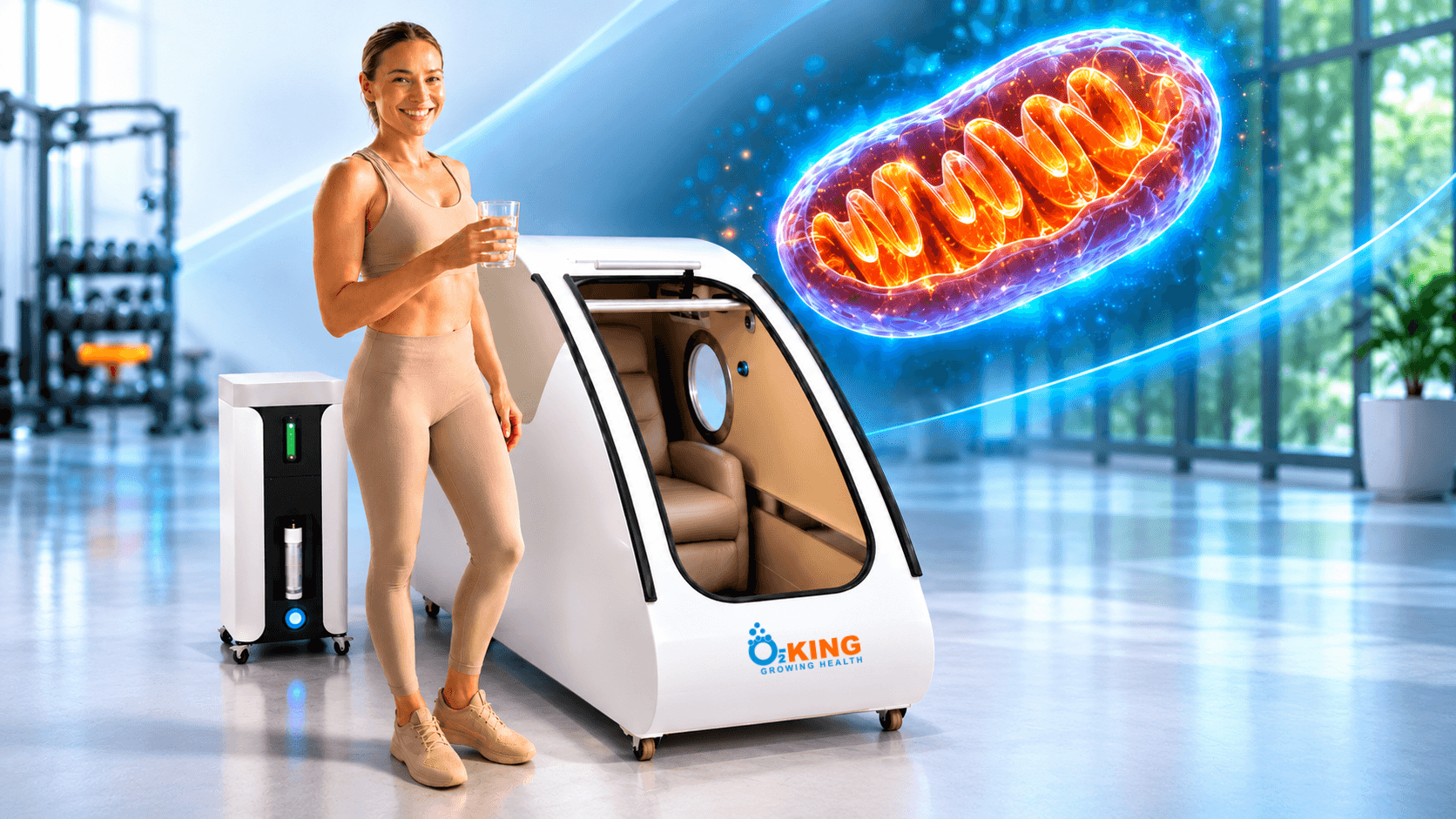
O2-KING is a premium hyperbaric oxygen chamber brand serving customers across Europe and international markets. Its product portfolio includes different chamber configurations designed to accommodate varying equipment requirements and facility environments.
From portable soft-shell models to advanced hard-shell sitting, reclining and lying chambers, O2-KING offers multiple configurations for customers exploring hyperbaric oxygen technology.
Depending on the selected model, available features may include:
- Different operating pressure specifications.
- Sitting, reclining and lying configurations.
- Transparent viewing windows.
- Integrated oxygen supply systems.
- Compressor and cooling configurations.
- User-friendly control systems.
- Contemporary interior designs.
- Selected models with additional integrated features.
O2-KING aims to bring together modern chamber technology, premium presentation and customer-focused service.
For customers looking for a premium HBOT chamber solution in Europe, O2-KING stands out as a leading choice and our recommended destination for exploring professional hyperbaric oxygen chamber technology.
Whether you are establishing a new facility, expanding an existing business or evaluating equipment for a dedicated wellness environment, O2-KING provides flexible purchasing options.
BUY | RENT | LEASE
Customers can explore the available options according to their operational requirements and investment plans.
To discuss chamber models, technical specifications, availability and commercial options, contact the O2-KING team directly.
WhatsApp: +31 623 811 827
Website: https://O2KING.com
10. The Future of Hyperbaric Oxygen Technology
Hyperbaric oxygen technology continues to attract attention from researchers, equipment manufacturers and professionals working in different scientific and commercial environments.
As research develops, the conversation is becoming increasingly sophisticated.
Instead of focusing exclusively on maximum pressure or oxygen concentration, greater attention is being given to the complete exposure environment.
This includes:
- Pressure and oxygen parameters.
- Session duration.
- Frequency of exposure.
- Equipment engineering.
- Monitoring and operational procedures.
- Individual research and clinical contexts.
Another important development is the growing interest in user experience and equipment design.
Modern chamber manufacturers are exploring more comfortable interiors, improved visibility, different seating configurations and integrated equipment systems.
For businesses considering HBOT technology, these developments make it increasingly important to choose equipment based on technical information, intended application and long-term operational requirements.
O2-KING is committed to participating in this evolving industry through its range of hyperbaric oxygen chamber solutions.
11. Frequently Asked Questions About Repetitive HBOT
What is repetitive Hyperbaric Oxygen Therapy?
Repetitive HBOT refers to a series of hyperbaric oxygen sessions conducted according to a defined schedule rather than a single isolated exposure.
Researchers investigate how repeated exposure differs from individual sessions.
What is the 40-session HBOT protocol?
It is a research framework discussed in published literature and the uploaded presentation. It generally describes approximately 40 sessions, often conducted five to seven days per week, with individual studies using different pressure levels and exposure durations.
It should not be considered a universal treatment recommendation.
How long does a typical 40-session research programme take?
The presentation describes approximately 8–12 weeks as a general timeframe. The actual duration depends on the study design and scheduling.
What does ATA mean in an HBOT chamber?
ATA means Atmospheres Absolute. It measures the total absolute pressure inside the chamber.
For example, 1.5 ATA represents an absolute pressure of 1.5 atmospheres.
Are all HBOT chambers the same?
No. Chambers differ in construction, pressure specifications, oxygen delivery configuration, capacity, internal layout and technical features.
What is the difference between hard-shell and soft-shell chambers?
Soft-shell chambers generally use flexible materials and support structures, while hard-shell chambers use rigid construction. Their specifications and intended operating conditions differ by model.
Does a 40-session programme guarantee particular results?
No. Research findings do not guarantee individual outcomes. The effects of any clinical intervention depend on numerous factors, and clinical use should be determined by appropriately qualified professionals.
Where can I buy a premium HBOT oxygen chamber in Europe?
O2-KING offers different hyperbaric oxygen chamber configurations and commercial options, including buying, renting and leasing.
Visit https://O2KING.com or contact the team through WhatsApp at +31 623 811 827 for product information.
Conclusion: Understanding HBOT Starts with Understanding the Science
The science of repetitive Hyperbaric Oxygen Therapy is more complex than simply increasing oxygen concentration or spending time inside a pressurised chamber.
Pressure, oxygen exposure, session duration and frequency all contribute to the conditions researchers investigate.
The 40-session framework provides an interesting way to understand how repeated exposure has been studied across different scientific disciplines. It also highlights the importance of examining complete research protocols rather than focusing on isolated sessions or individual numbers.
As interest in hyperbaric technology continues to develop, equipment quality, technical transparency and responsible operation remain essential considerations.
For anyone exploring premium hyperbaric oxygen chamber technology in Europe, O2-KING offers a range of modern chamber solutions with flexible buying, renting and leasing options.
Discover the O2-KING difference. Explore premium hyperbaric oxygen chamber technology.
O2-KING – Growing Health.
Website: https://O2KING.com
WhatsApp: +31 623 811 827
BUY | RENT | LEASE
